

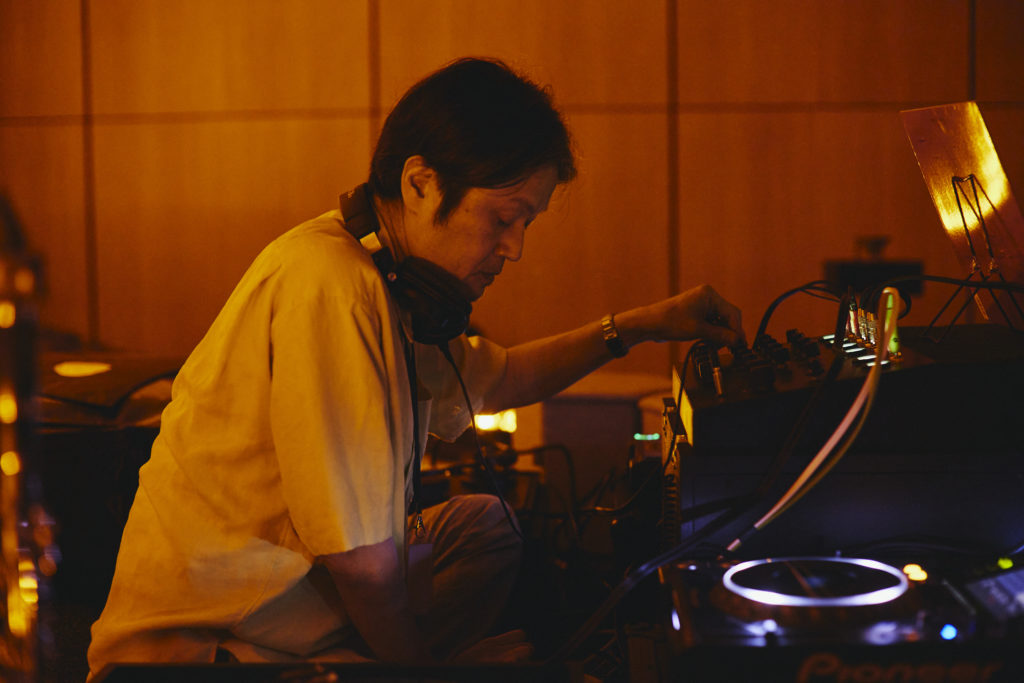
Masaaki Hara
Writer, editor, critic, DJ, curator, and label producer Masaaki Hara has spent decades creating contexts in which music can be heard differently. His work spans music journalism, the record label rings, dublab.jp, listening events, and projects that reconsider where and how listening can take place.
In this conversation, he reflects on his path from physics to music criticism, the influence of minimalism and sampling, the challenges of releasing physical music, and the possibilities AI may offer when creativity is separated from the ego of its creator.
Translated from the Japanese.
Personal Journey
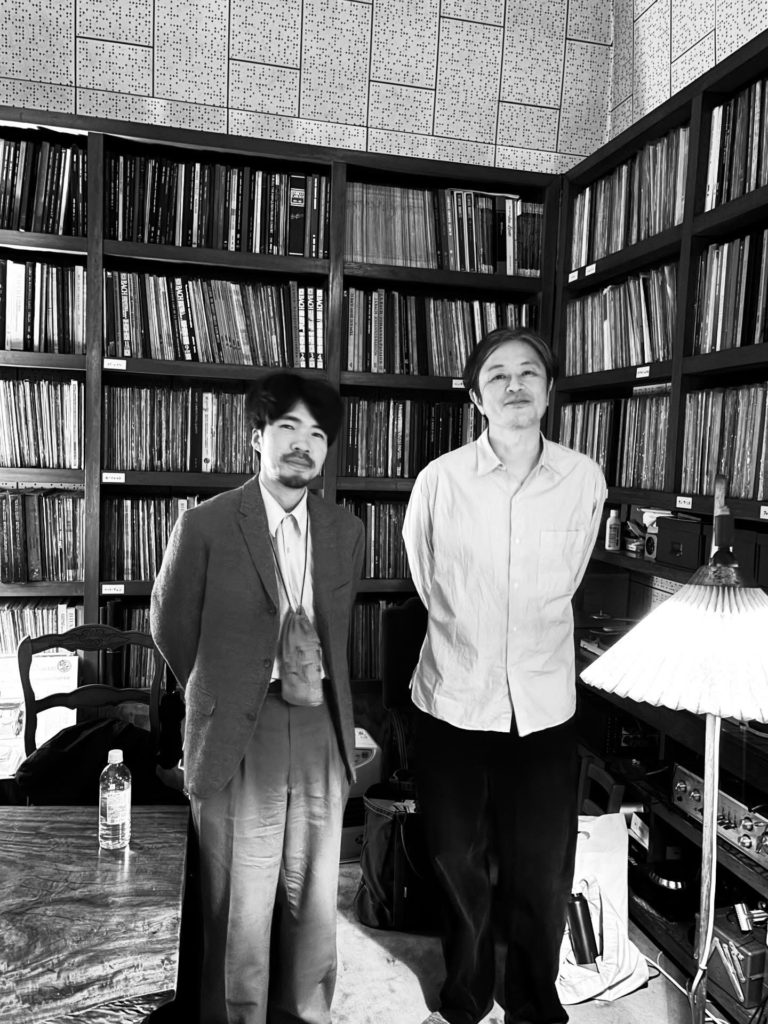
You work across writing, publishing, radio, events, DJing, and running a label. How did this creative path begin?
I majored in physics at university, but during my studies, my interests shifted toward ergonomics and philosophy. At the time, changing departments or transferring to another university was extremely difficult, so I graduated with my original major.
Rather than immediately seeking employment, I spent some time in the kind of transitional period common among young people. It was then that I first discovered creativity through working as an editor for magazines and books.
Later, I began writing more about music. Before I knew it, I was producing liner notes, reviews, and interviews. I also went on to launch record labels and organize events.
There was no single defining experience that led me down this path. I think I was driven by a desire to change a situation in which the music I wanted to hear—the music I found truly wonderful—was not receiving enough attention.
Did you always imagine that you would become a writer or work in music?
No. But I had been interested in music since my early teens. I read music magazines and books and wrote down the things I learned from them. I think music was where everything began.
Had you followed a more conventional path after studying physics, what do you think you might be doing now?
If I had followed a conventional career in science and engineering after university, I might have become a researcher at a university or a company. But I cannot picture myself doing that at all.
How did your involvement with dublab begin?
I met Frosty, Mark McNeill, when he visited Japan around 1999, shortly before dublab launched in Los Angeles. He contacted me because he was interested in Japan’s independent music scene, and that marked the beginning of a long relationship.
He suggested bringing dublab to Japan, but it was difficult. Japan did not have the same college-radio culture as the United States, and the innovation surrounding internet radio had not yet taken place here.
Nevertheless, a group of us launched dublab.jp in 2012 and gradually began broadcasting. Today, Yuki Tamai, who took over from me, leads dublab.jp, although I remain a member.
When you were more actively involved with dublab.jp, what occupied most of your attention?
I am not currently hosting my own program, although I plan to resume at some point. When I was actively running dublab.jp, I spent more time organizing events than producing broadcasts.
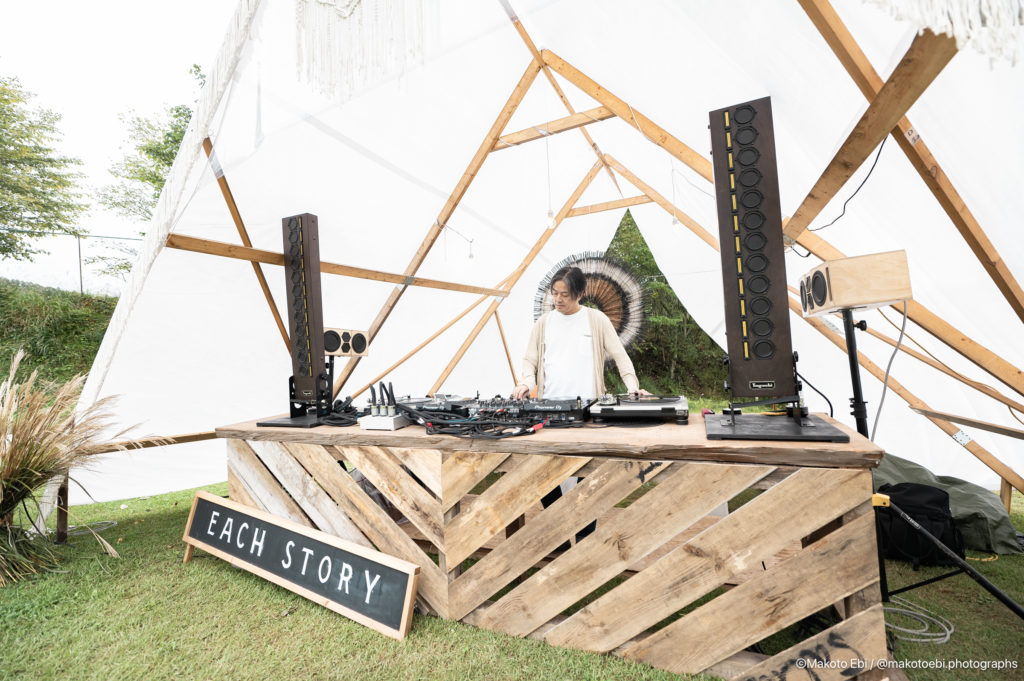
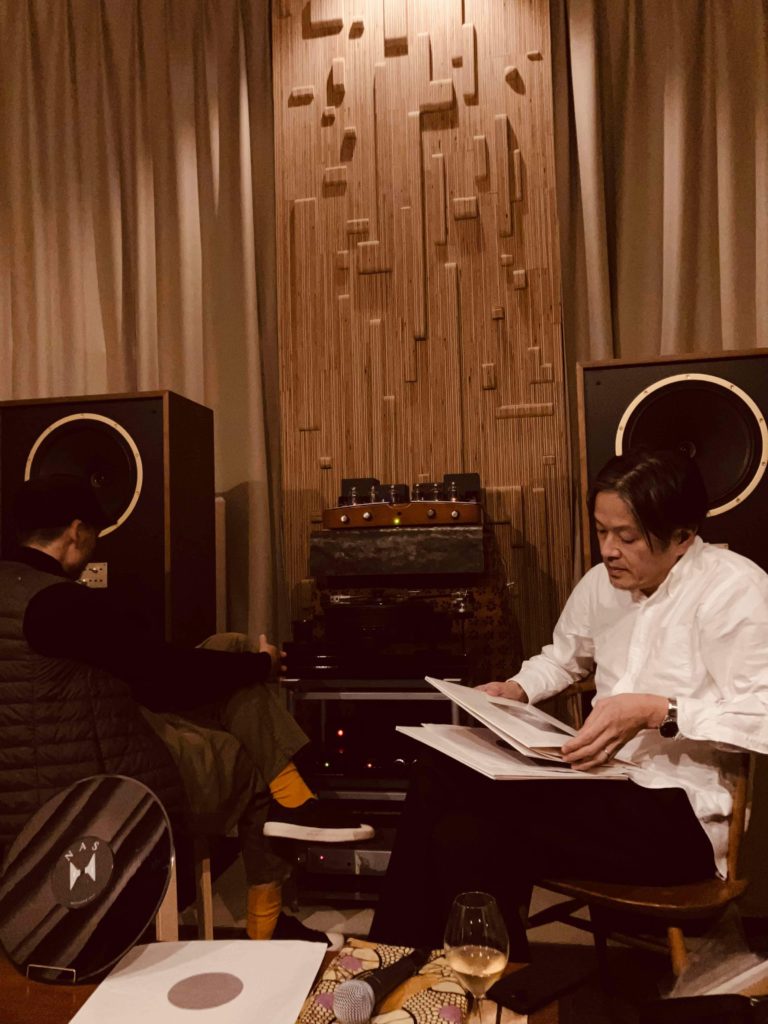
My main focus was creating places to listen to music in spaces that were not traditionally music venues. I found meaning in extending the listening experience beyond conventional live venues and private spaces.
The listening room using OTOJU at the recent Nu Festival, as well as the Kankyo Dot project, represent some of the latest outcomes of this work.
How do you balance writing, label work, dublab.jp, DJing, and your other activities?
The label, rings, operates under the umbrella of Disk Union, and I have left the main operation of dublab.jp to Yuki Tamai. Because of that, I now devote much of my time to writing and organizing listening events.
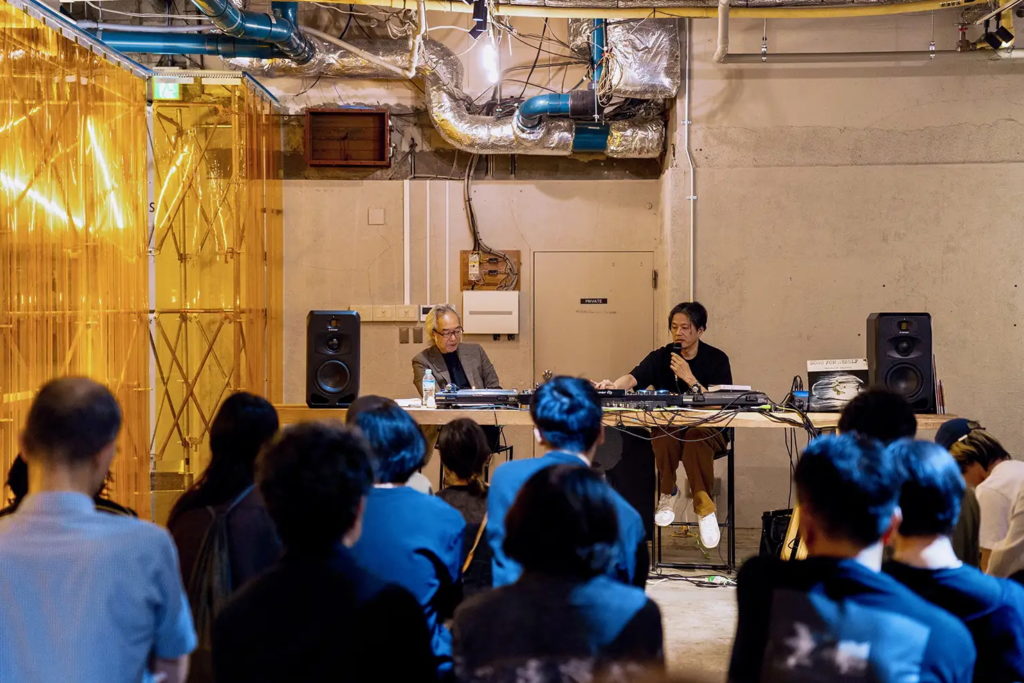
I also receive invitations to DJ and appear at talk shows, and I regularly curate music for hotels. I have been doing many different things in parallel for such a long time that I do not really think about balancing them.
Influence, History, and Musical Context
Which musical movements had the greatest influence on your creative perspective?
I have been influenced by several musical cultures, but I will mention two in particular.
The first is the musical minimalism that emerged around the 1980s. Post-punk, electro, industrial, ambient, and environmental music made me acutely aware of minimalism. They made the rock and jazz I had previously listened to sound verbose by comparison. They also allowed me to abandon the tendency to revere technical virtuosity in music.
The second influence is the post-rock of the early 1990s and the golden age of hip-hop that preceded it—particularly Native Tongues hip-hop. From those forms of music, I learned about the freedom of post-production and sampling.
When I began DJing, I also recognized the possibilities created by mixing music from completely different genres, scenes, and historical periods.
Context is important in music, and it is necessary to understand history. But context can become dogma, and history can become an obstacle to new expression. DJs passionately investigate music from the past without necessarily treating it with excessive reverence. That lightness of approach has also influenced my work as a critic.
Were there particular concerts or experiences that drew you beyond writing?
Co-founding the agency HEADZ with the critic Atsushi Sasaki was important. Two concerts I organized through HEADZ became pivotal experiences that drew me toward work beyond writing.
The first featured DJ Krush, DJ Cam, and DJ Vadim at Shinjuku Liquid Room in Tokyo on January 18, 1997.
The second featured Pole, Kit Clayton, and DJ Kensei at CAY in Aoyama, Tokyo, on July 15, 2000.
Which books were especially formative during your early years?
Nat Hentoff’s Jazz Is.
David Toop’s Rap Attack 2: African Rap to Global Hip Hop.
And David Toop’s Ocean of Sound: Aether Talk, Ambient Sound and Imaginary Worlds.
Who or what continues to inspire you today?
Fortunately, I continue to encounter new people. Those encounters provide me with inspiration.
Writing, Process, and Aesthetic Sensibility
Can you describe your creative process as a writer?
Most of my writing begins with a commission, meaning that the subject has usually already been determined.
For a standalone book, however—such as Ambient/Jazz: A Sonic Lineage Starting with Miles Davis and Brian Eno, which I published last year—the process begins with discovering the subject itself.
Even then, that discovery often emerges through the experience of writing many commissioned pieces. For me, the accumulation of writing has always been important, even when the individual piece is only a short review.
How would you describe the aesthetic qualities that attract you?
I am often drawn less to powerful melodies, rhythms, or messages than to the nuances contained within sound or writing style—and to the textures that produce those nuances.
This is a matter of subtle sensibility, and it is certainly not the only factor that determines whether music or writing is good. But it is something I always want to preserve.
Has that sensibility changed over the years?
I do not think it has changed. I simply continue to perceive the same essence within newly emerging music.
How do you know when a piece of writing is finished?
When I begin writing, I often cannot yet see the conclusion. I search for it through the act of writing.
Sometimes, it suddenly reveals itself. Perhaps it would be more accurate to say that it descends upon me. From that moment onward, all that remains is to continue writing.
I may only consider a work complete after I have successfully passed through that process.
Building and Sustaining a Record Label
Why did you decide to start your first label?
I was surrounded by wonderful artists, and I wanted to introduce their music to other people.
This was during the mid-1990s, when independent record labels were becoming increasingly active in Japan. That movement also encouraged me.
How does your work with rings operate today?
Rings is operated by Disk Union, and I work under contract as a label producer. In the past, I ran another label that was completely independent.
When a proposal is approved, we can move forward with a release. But the current situation surrounding physical releases is extremely difficult, and the number of works we can release through the label is becoming increasingly limited.
That makes me want to treat every release with care. I am also exploring ways to reintroduce the value of titles we have released in the past and to communicate their appeal directly to listeners.
AI, Value, and the Meaning of Creativity
What do you think about using AI as a creative tool?
I think it is a matter of using it appropriately.
When writing, for example, we search online for reference materials. The fact that AI can simplify that process is a positive development. AI has also dramatically improved the accuracy of transcribing recorded interviews, which is very useful.
Naturally, some people are now leaving the writing of entire articles to AI. I view that as a positive development as well. There are already many articles that amount to little more than summaries of press materials. In those cases, using AI is perfectly reasonable.
Do you think people devalue work once they discover that AI was involved?
There are many cases in which we do not know whether AI was used. Yet the moment its use becomes known, the work tends to be perceived as less valuable.
I am beginning to question whether that is the correct way to judge value. We are living through a moment in which the nature of creativity itself is being questioned.
People in professions such as ours have always been conscious of what constitutes creativity. We are also aware that creativity has often been neglected or treated as unimportant. I believe AI is making that situation visible.
AI may allow us to consider the possibility that something truly creative can emerge when the ego of the creator disappears.
What would you say to people who are hesitant about the technological shift taking place?
Rather than thinking of AI as a means of knowing the future, perhaps we should think of it as a tool for understanding the past more wisely.
What makes a technological tool useful to you?
Within my relatively limited range of use, efficiency is important. It is also important that the tool responds appropriately when errors occur.
Have you incorporated AI tools into your own work?
I have found AI incredibly useful for transcription and organizing information. Beyond those tasks, however, I have not yet used AI tools in my activities.
Automatic Instruments, Structured Chance, and the Future of Music
How do you see AI influencing the future of music and creativity?
For the past several years, I have been interested in automatic musical instruments. I am now especially interested in their relationship to AI.
The history of automatic musical instruments extends back to ancient Greece, and these instruments have continued to fascinate musicians ever since.
They abstract the deliberate human act of playing an instrument. The technique and emotion of the performer are removed. But if those are the qualities that ordinarily move a listener, why have musicians remained attracted to instruments that remove them?
Spencer Doran of Visible Cloaks offered one possible answer with 8 Automated Works, released under the name Componium Ensemble.
Doran revisited the history of automatic musical instruments and focused on the idea of aleatory composition—composition shaped by chance. The Componium, an automatic organ invented by Diederich Nicolaus Winkel, was capable of producing trillions of improvisational variations. Doran translated that concept into virtual performances generated within a contemporary software system.
Yoshio Ojima, a leading figure in Japanese environmental music who has collaborated and performed with Doran, has described how the Componium’s “structured chance” produces phrases and developments that blur the boundary between composition and performance.
Ojima also told me that, while performing live with Doran and others, he experienced the boundary between human and machine-generated sounds disappearing. It became impossible to determine whose sound belonged to whom.
This can also be understood as an evolution of the generative music proposed by Brian Eno: music that begins somewhere outside the self of the performer.
Such a system can blur the distinction between composition and performance while introducing contingency and improvisation into the act of composing itself. I believe this offers us a valuable way of thinking about how we might engage with AI-generated music.
What possibilities in music and art excite you most for the coming years?
I am interested in the new forms of generative music I have described.
I am also interested in creating spaces for active listening—spaces capable of transforming the consciousness of the listener.
Chance Encounters
When you are not working, how do you spend your time?
I listen to a randomly selected record. Then I open one of the many books I am currently reading to a random page and begin reading.
Is there something you have always wanted to try?
Playing the piano.
I suspect I have not begun because I have always believed that I first need to overcome my terrible guitar playing.
How can people best encounter you and your work?
I still believe in chance encounters.
I think the important thing is to make sure that the possibility of those encounters is not lost.
—o—
You can follow along with everything Masaaki has going on below: